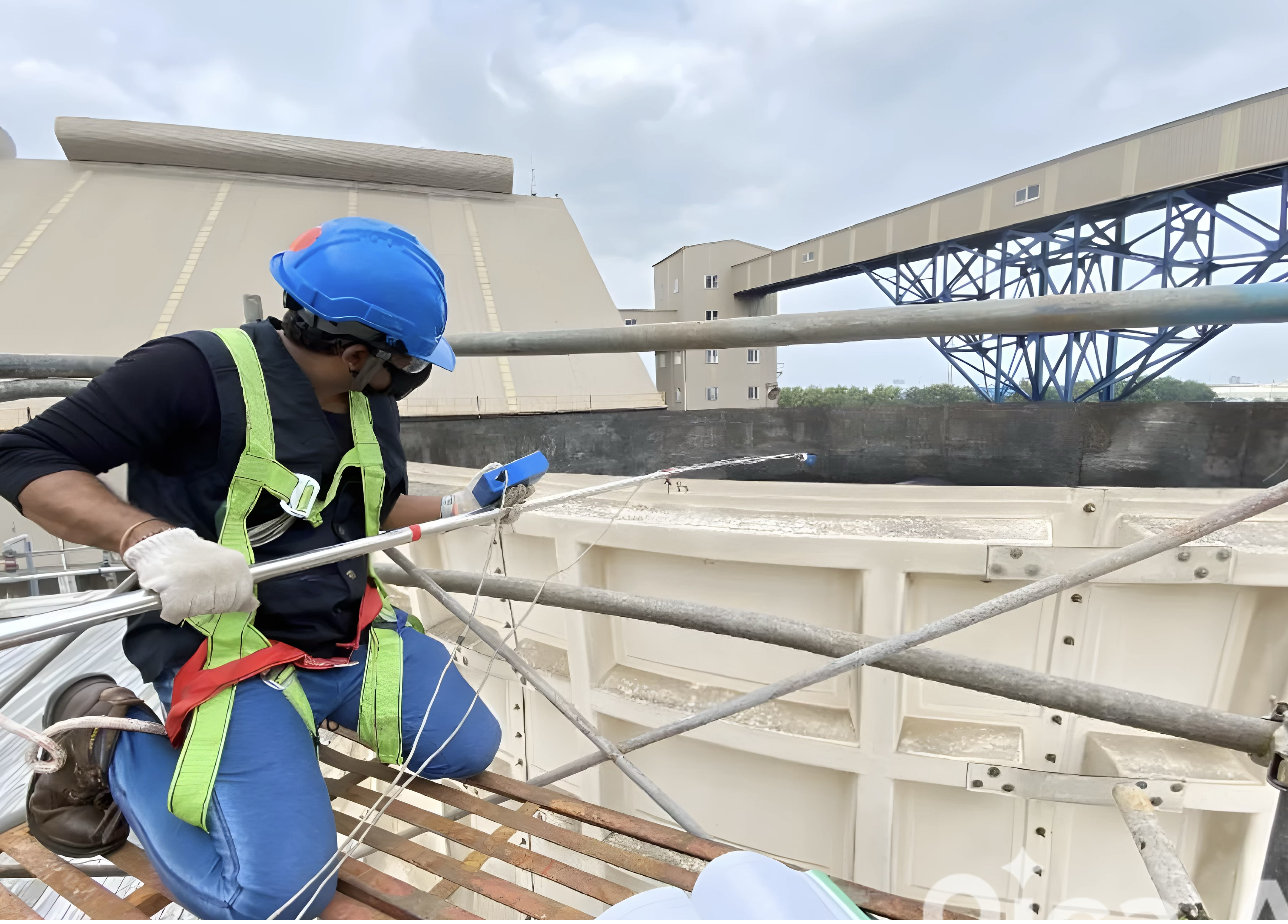
01 Performance Test - As Is
Baseline airflow and kW are recorded before replacement.
Current operating condition is documented first, creating the reference point for the upgrade and the post-installation comparison.
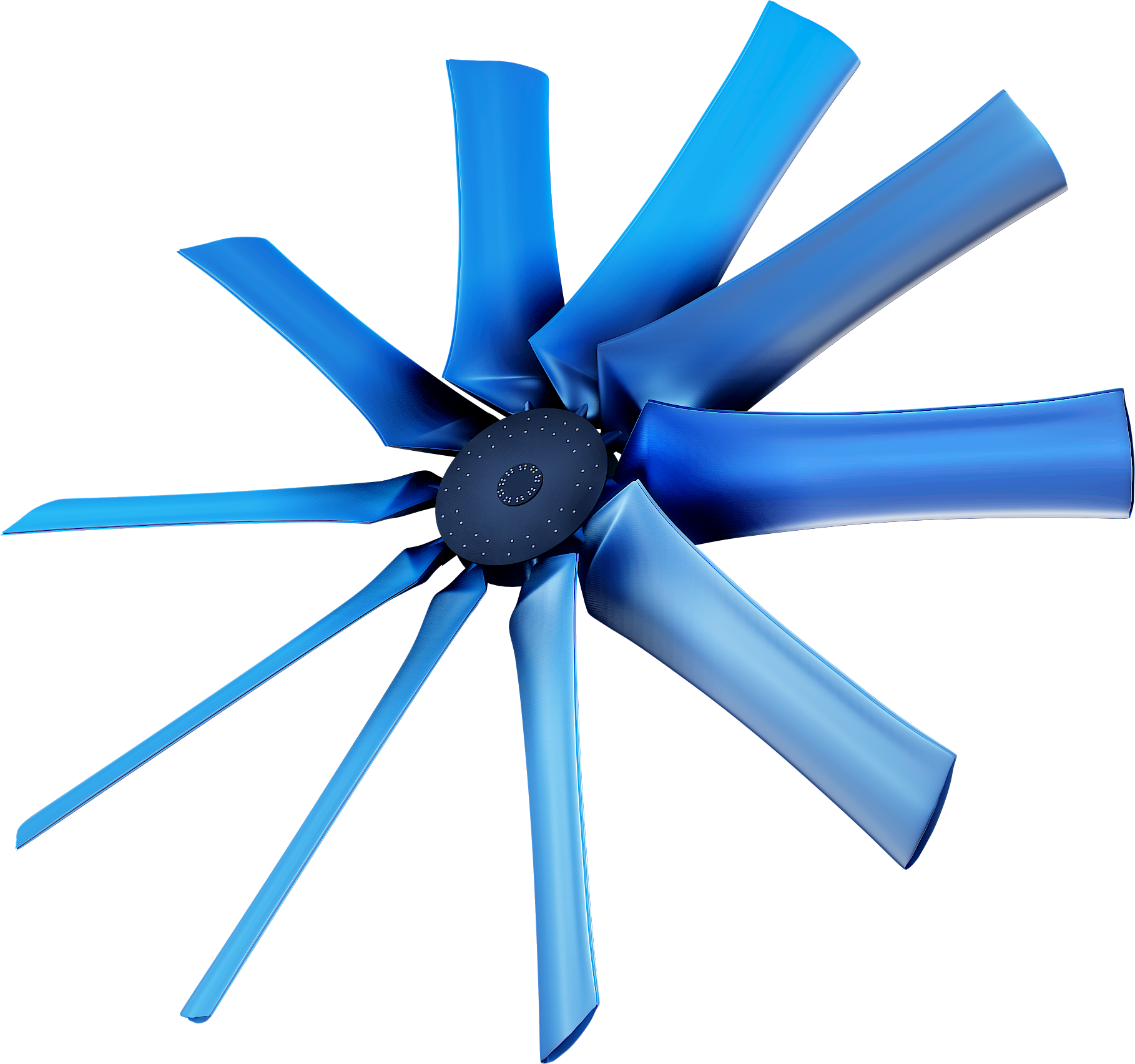
Customized blade design based on aerodynamics for cooling towers and ACHEs. Every fan is engineered from your unit's operating data — motor power, fan RPM, water flow, and thermal duty.
View SpecificationsEvery blade profile is designed from your tower's actual operating data — motor current, fan RPM, circulating water flow, and thermal duty. Chord, twist, and tip shape are optimized from there.
Hollow composite construction cuts rotating mass. The layup is engineered for thermal stability, corrosion resistance, and long service life.
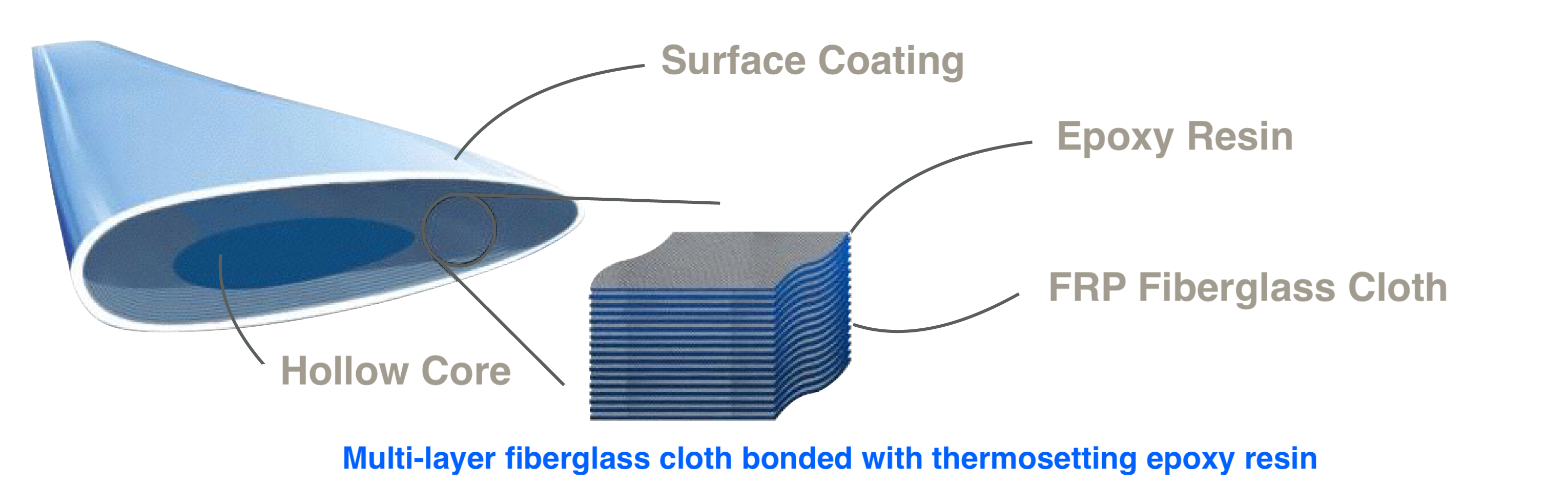
This is not a decorative material stack. The coating, resin system, reinforcement layers, and hollow core are selected to protect aerodynamic performance while keeping structural loads under control.
Low-friction coating helps preserve aerodynamic smoothness and adds another layer of corrosion protection at the blade exterior.
High-temperature thermosetting resin supports structural stability in hot service and contributes to long-term dimensional consistency.
Multiple reinforcement layers are bonded to build stiffness, impact resistance, and the structural integrity required for large-diameter fan duty.
The hollow interior lowers rotating mass versus foam-filled alternatives, reducing mechanical load and supporting longer service life in the drivetrain.
Most projects start with FRP. CF-FRP is the usual step-up when the client wants a higher guaranteed performance package.
The hub assembly is specified around corrosion exposure, operating temperature, and maintenance strategy. Unlike conventional fan assemblies, KM fans do not require a seal disc.
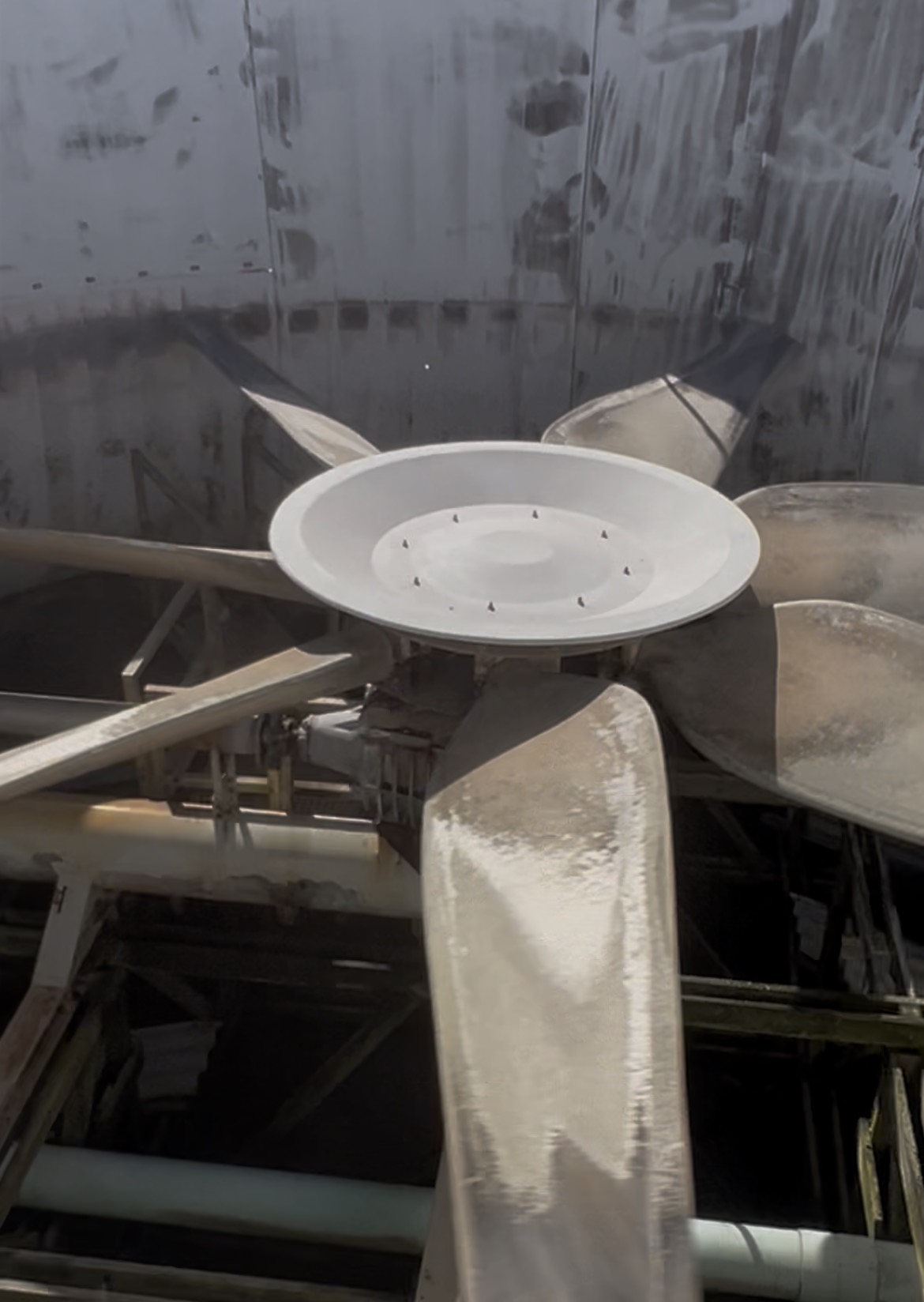
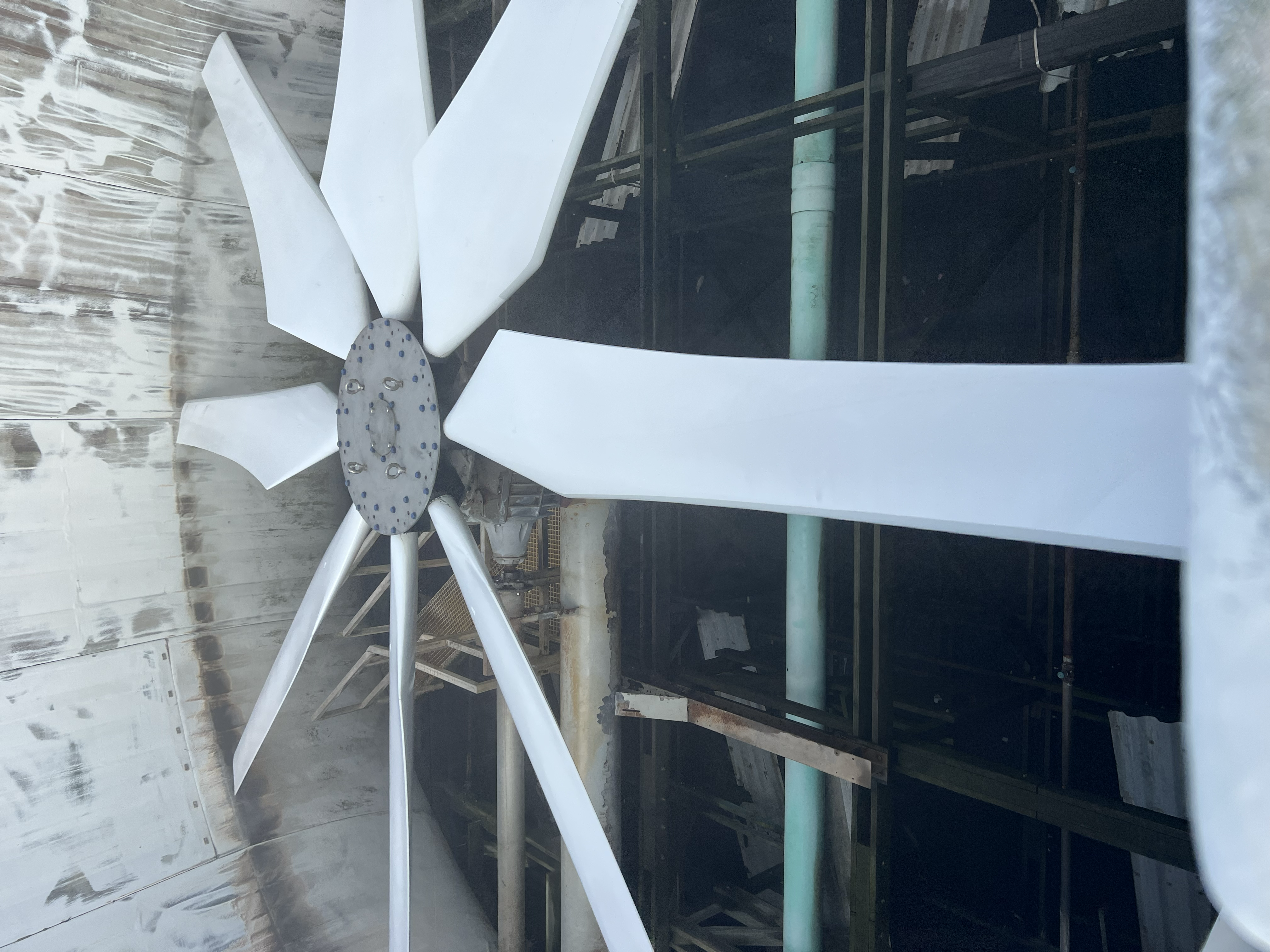
We do not treat hub material as a default catalog item. The material grade is selected to fit the operating environment and the commercial logic of the project.
KM does not sell fan hardware as a standalone item. Each upgrade follows a standard four-step execution process, with OEM site supervision required and complimentary before-and-after airflow measurement included as part of the project scope.
Current operating condition is documented first, creating the reference point for the upgrade and the post-installation comparison.
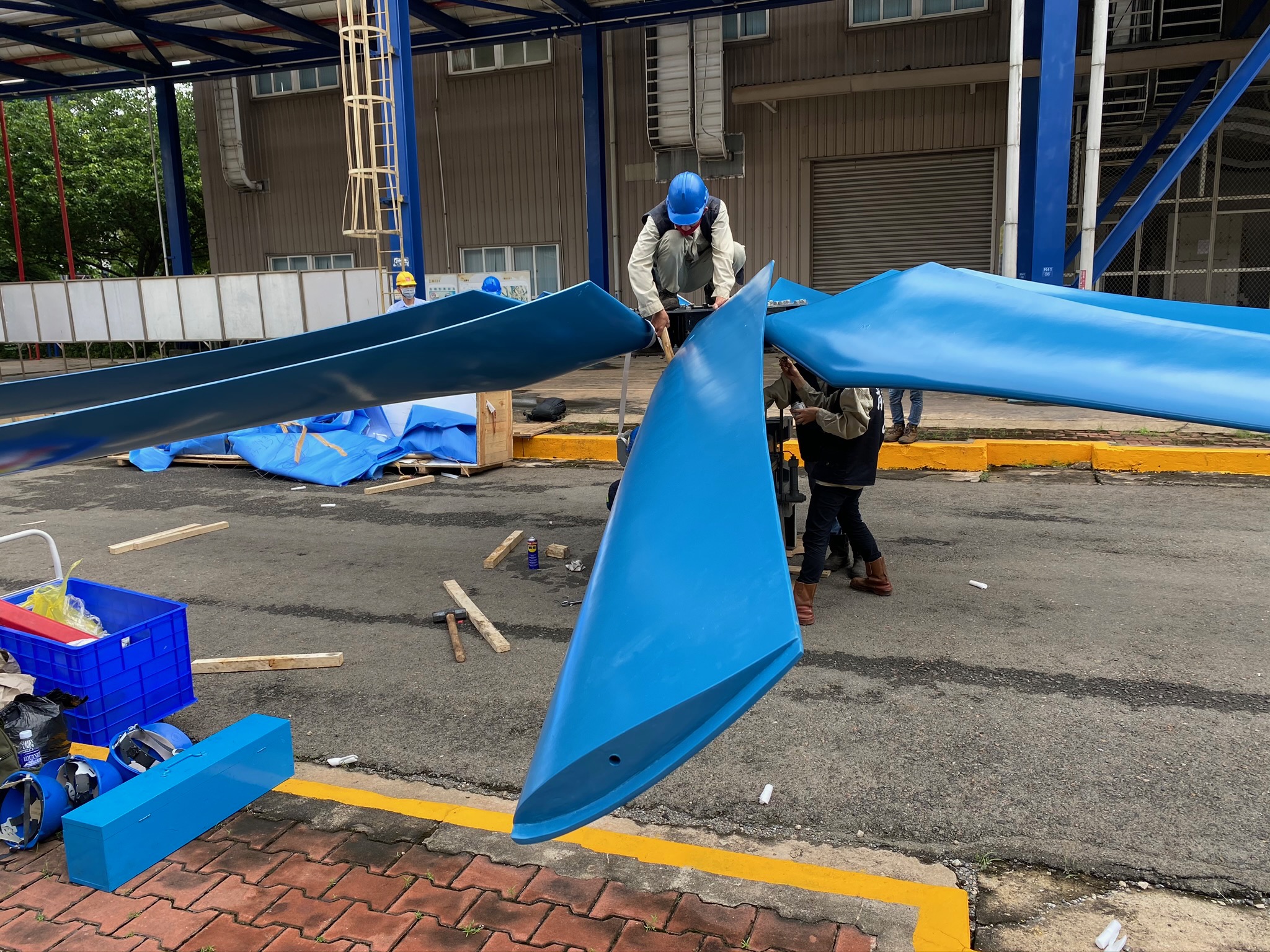
Blade and hub assembly is completed in advance so field replacement can move faster once the shutdown window opens.
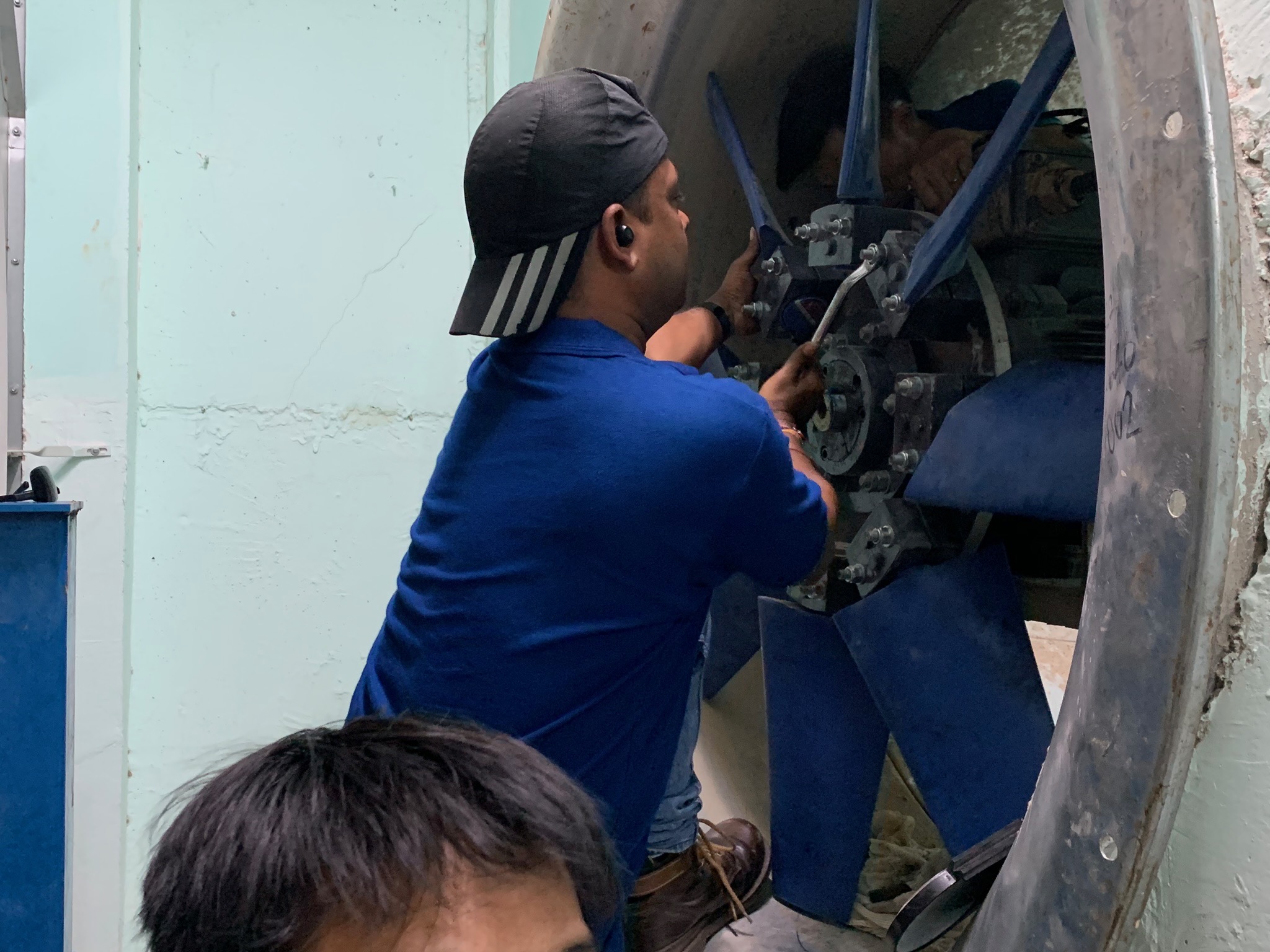
OEM technicians are required on site to supervise installation and carry out the initial setting of the replacement fan.
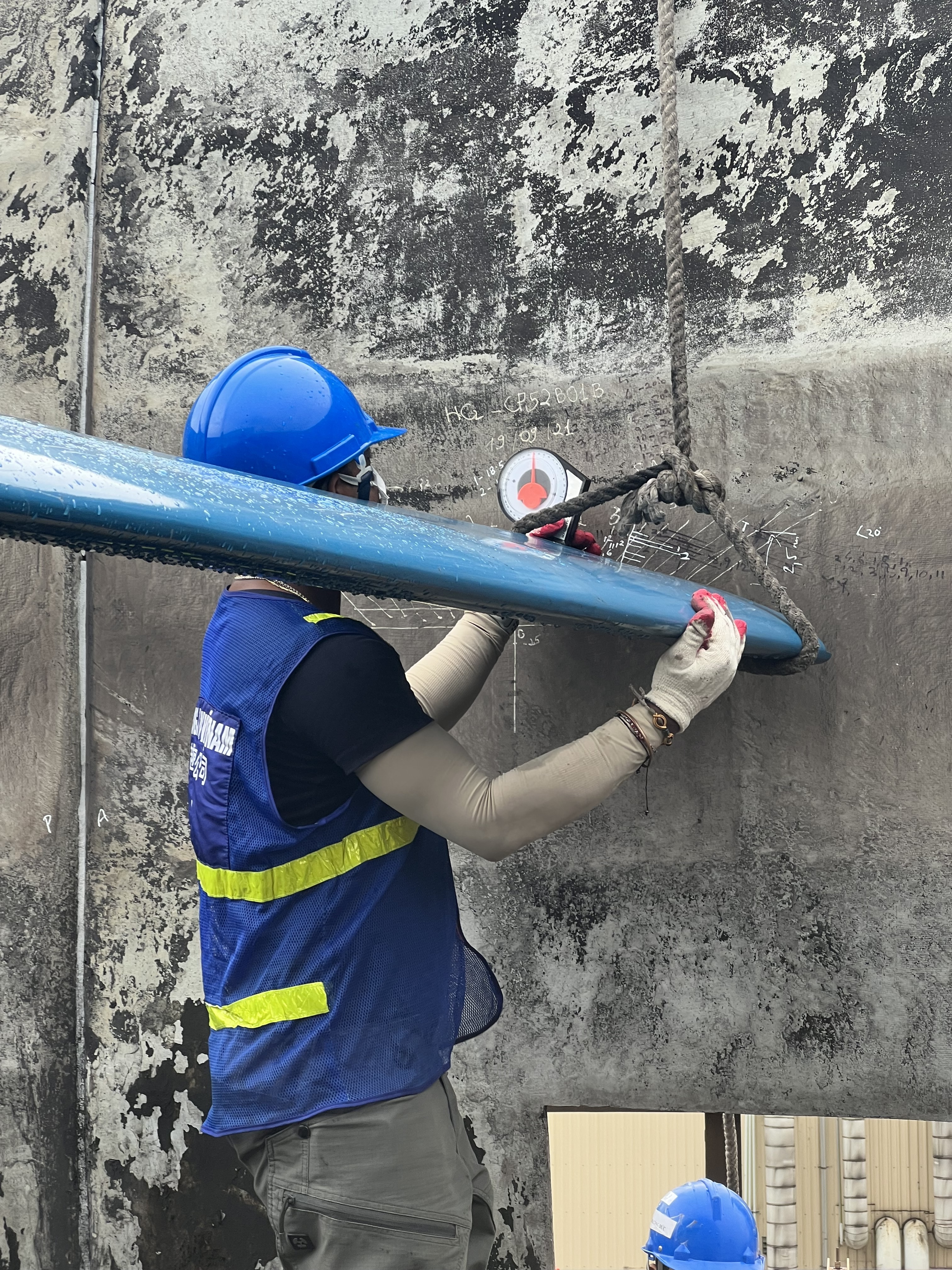
KM includes complimentary before-and-after airflow measurement as part of project execution, then fine-tunes blade setting around actual tower conditions and the client's performance target.
This upgrade model fits best where cooling tower duty, fan power, airflow recovery, and site-specific execution all need to be evaluated together, not treated as separate decisions.
The strongest fit is where the customer is not simply buying replacement hardware, but a site-specific solution tied to energy, airflow, thermal performance, and execution discipline.
Well suited to refinery and petrochemical sites where summer performance, plant loading, and energy cost make airflow improvement commercially meaningful.
Appropriate for power and utility applications where replacement scope has to respect planned outage windows and long-term operating reliability.
Strong fit for process environments where blade material, hub material, and operating point all need to be selected around actual site duty.
Applicable to airports, hospitals, universities, office complexes, and other large commercial facilities with substantial cooling tower and HVAC demand.
Every fan is engineered from your tower's operating data. Send us your fan diameter, motor power, fan RPM, and water flow — we'll return an engineered recommendation.
Request a Custom Design